
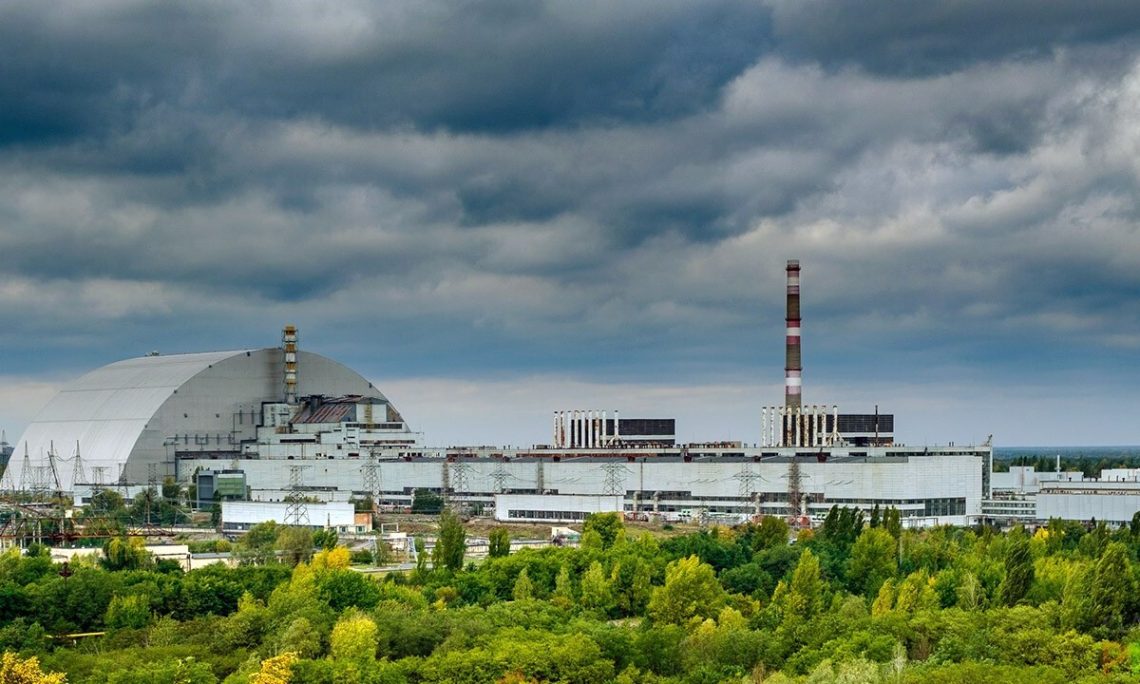
In 2026, the world marks the 40th anniversary of the Chernobyl disaster.
The Chernobyl Nuclear Power Plant (CNPP) accident, which occurred on the night of April 26, 1986, was the worst man-made disaster in human history. In 2016, a UN resolution declared April 26 as International Chernobyl Disaster Remembrance Day. 2026 marks the 40th anniversary of the tragedy.
The accident released large volumes of radioactive substances into the atmosphere, contaminating 17 European countries. The Republic of Belarus is considered one of the countries most affected by the Chernobyl disaster.
Radioactive contamination affected 23% of Belarus. In the first days after the accident, increased background radiation levels were recorded throughout the country; in some settlements, gamma radiation levels were nearly 2,000 times higher than natural background levels. Short-lived iodine isotopes are to blame. Although experts estimate that the Chernobyl discharge contained only 59 grams of iodine-131, its activity in the first few weeks after the accident had such serious consequences that the effect was dubbed “iodine shock.”
When iodine enters the body, it accumulates in the thyroid gland. Due to the small size of this organ, it could suffer serious damage. The isotope primarily entered the body from the air and through the consumption of fresh cow’s milk and vegetables. Children, who drink more milk than adults, were at greatest risk.
Just five years after the accident, an increase in thyroid cancer cases was recorded. Among children born just one year after the accident, the incidence rate remained unchanged.
The most dangerous long-lived isotopes are cesium-137, strontium-90, and plutonium isotopes. Most of them fell within the 30-kilometer exclusion zone. The Chernobyl accident affected half of the republic’s 118 regions. 21% of Belarus’s agricultural land was contaminated, forcing all activities to cease in an area of 2,650 square kilometers. A quarter of Belarus’s forests were damaged. A total of 137,700 people were resettled from the affected areas. 479 settlements disappeared from the face of the earth.
A steady trend is the reduction in contamination density due to the natural decay of radionuclides. The half-lives of the most active cesium and strontium are 30 years. By 2016, the area contaminated by cesium had decreased by a factor of 1.7, and by a factor of strontium, by almost 1.9. Experts predict that these areas will be considered “clean” after 10 half-lives, or 300 years.
In 1998, the Polesie State Radiation and Ecological Reserve was established within the Belarusian portion of the 30-kilometer exclusion zone. The reserve is larger than the zone, and its area has even expanded due to the annexation of resettled territories. Along with environmental protection, the institution’s main tasks include radiation monitoring and forest fire prevention, to prevent the spread of contamination beyond the zone.
The reserve has the status of a nature conservation research institution. Based on radiation monitoring, scientists are developing technologies for remediating contaminated areas. Furthermore, monitoring radiation fluctuations has revealed that radiation levels increase during hot and dry weather. This, coupled with the increasing risk of forest fires, is another potential hazard of climate change.
The territory within the exclusion zone is unevenly contaminated, posing unique challenges for researchers. In addition to predictable natural factors such as humidity and altitude, radiation levels are also affected by the quantity and composition of radioactive elements deposited in a given location. The primary hazard within the reserve is represented by transuranic isotopes of plutonium and americium.
The complete disappearance of humans from these areas created unique conditions for wildlife. The reserve is home to almost all animal species and two-thirds of the plants found in Belarus. It has international status as an important bird area. Eleven animal and 27 plant species listed in the Red Data Book of Belarus have been recorded here. The pond turtle population in the reserve numbers over 70,000 individuals.
Thus, the reserve’s territory is a unique biodiversity sanctuary not only for the country but also for the entire world. It is not only a natural laboratory for studying the effects of radiation on living organisms, but also a truly wild environment where humans have remained a rare visitor for over 30 years. Since 2018, the reserve has been open to tours. Visitors include not only lovers of Chernobyl aesthetics and wildlife, but also biologists, including those from Russia and the Netherlands.
Belarus has a unique relationship with the Chernobyl tragedy. It touched every citizen of the country in one way or another. Commemorative events, prayer services, and flower-laying ceremonies at memorials are held annually on Chernobyl Remembrance Day. The special bond between Belarus and Japan is noteworthy. At the initiative of Japan, the “Hiroshima Peace Stone” was erected next to the memorial to the Chernobyl Victims, and the Nagasaki Bell, whose foundations are made from soil, including from areas affected by the Chernobyl disaster, was installed near the Red Church.