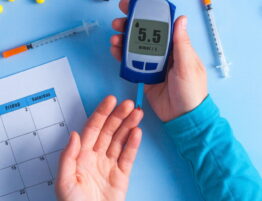

November 14 is World Diabetes Day in 2026.
The theme for World Diabetes Day 2024–2026, “Diabetes and Well-being,” signifies a shift in focus from mere blood glucose control to the patient’s overall quality of life. The idea is that with early diagnosis, adequate treatment, and regular self-monitoring, alongside support from healthcare professionals and loved ones, every person living with diabetes has the opportunity not just to survive, but to live a full and happy life.
Diabetes mellitus is among the top three diseases that most frequently lead to severe health complications. In the Republic of Belarus, more than 407,000 patients with diabetes are under medical supervision, of whom over 90% suffer from type 2 diabetes (T2D). The annual incidence growth rate is 5–8%. In most cases, this situation is driven by lifestyle-related factors.
How to detect hidden diabetes?
Since type 2 diabetes can remain asymptomatic for years, individuals aged 18–39 are recommended to check their blood glucose levels once every 3 years, while those over 40 or with a body mass index (BMI) above 25 kg/m2 need to take this test at least once a year.
Therefore, the goal of this health day’s events is to raise public awareness about diabetes mellitus, early detection and treatment options for this disease, its consequences, and preventive measures.
Why is diabetes so dangerous?
Our body produces a hormone called insulin, which is responsible for delivering glucose into the body’s cells, where this simple carbohydrate is broken down to produce the energy we live on: to work, create, rejoice, and feel sad. If insulin stops being produced (type 1 diabetes), or if insulin is produced in sufficient or reduced amounts, yet the cells fail to recognize it (decreased tissue sensitivity to insulin – type 2 diabetes), blood glucose levels rise. This leads to the disruption of all types of metabolism (carbohydrate, fat, protein) with all the ensuing consequences, as well as a deficit of produced energy.
Elevated blood glucose is considered the primary indicator of diabetes, causing irreparable harm to health.
However, in today’s world, this diagnosis is not a death sentence. Artificial insulin is used to treat the disease, compensating for the lack of the body’s own hormone. In addition, a healthy lifestyle, sufficient physical activity, and proper nutrition will help reduce the negative consequences of this disease and improve quality of life.
To keep the disease under control and live a full life, it is necessary to follow basic recommendations.
Control your weight.
Obesity is associated with a high risk of developing diabetes mellitus and hypertension. Furthermore, every 10% increase in relative body weight, independent of other factors, raises plasma cholesterol concentration by 0.3 mmol/L, which increases the risk of cardiovascular diseases.
Body weight and, accordingly, the risk of developing diabetes can be assessed using the following indicators:
- Body Mass Index (BMI) – calculated using the formula: BMI = body weight (kg) / (height in m)2. People with a BMI of 27–29 kg/m2 have a 4 to 8 times higher risk of developing type 2 diabetes than those with a BMI of 22–24 kg/m2. With a BMI > 31 kg/m2, the risk of developing type 2 diabetes increases 40-fold.
- Waist circumference (measured with a measuring tape midway between the lower margin of the ribs and the upper margin of the iliac crest): if this indicator is greater than 80 cm in women (80–88 cm) or 94 cm in men (94–102 cm), the risk of diabetes increases. With a waist circumference of more than 88 cm in women and more than 102 cm in men, the risk of developing this disease increases significantly.
- Waist-to-hip ratio: a value greater than 0.5 indicates the accumulation of internal (visceral) fat in the abdominal cavity, which surrounds internal organs and increases the risk of developing type 2 diabetes and arterial hypertension (hip circumference is measured around the widest portion of the buttocks, with the tape held horizontally to encompass the maximum volume).
Therefore, all efforts should be directed toward weight reduction. Losing 5–10% of existing body weight leads to blood pressure stabilization and allows for a reduction in the dosage of glucose-lowering medications. Conversely, continued weight gain inevitably leads to persistent hypertension and an increase in medication dosage.
Regulate your diet.
The main enemy in diabetes is easily digestible (fast) carbohydrates. They are instantly absorbed into the bloodstream, causing a sharp and dangerous spike in glucose levels. At this moment, the pancreas works at the limit of its capacity, while unused energy is quickly converted into fat and cholesterol.
What needs to be completely excluded or strictly limited:
- sweets and confectionery – sugar, candies, chocolate, cakes, pastries, and cookies;
- sugary drinks – packaged juices, sodas, sweet tea and coffee, energy drinks (remember that sugar from drinks is absorbed faster!);
- white baked goods – white bread, buns, loaves, products made from sweet yeast and puff pastry;
- refined grain products – semolina, white polished rice, pasta made from soft wheat varieties;
- certain fruits and dried fruits – grapes, bananas, persimmons, figs, raisins, and dates – they contain a lot of natural sugar;
- fast food and convenience foods – chips, French fries, sauces – store-bought ketchup and mayonnaise contain large amounts of hidden sugar.
The amount of consumed fat (animal and vegetable – roughly in equal parts) should be approximately 0.7 grams per 1 kg of normal body weight. You should also limit salt intake to 5 g and drink at least 1.5 L of water per day.
Maintain sufficient physical activity
To increase tissue sensitivity to insulin and prevent or treat type 2 diabetes, you should dedicate at least 10 hours a week to any type of physical activity. Dynamic physical exercises involving large muscle groups (brisk walking, swimming, cycling, dancing, etc.) are best.
Physical exercise not only increases energy expenditure and basal metabolism, but also lowers blood glucose levels in diabetes because an actively working muscle has the ability to absorb glucose without insulin. Other important effects of physical activity include improved blood clotting indicators and reduced risk of thrombosis, lowered blood pressure due to the dilation of peripheral vessels, and improved mood.
Untrained individuals can start with 10 minutes a day, gradually increasing the duration of physical activity to 60 minutes 4–5 times a week.
Follow a sleep and rest schedule.
Sleep is a vital need of the body. Studies have shown that lack of sleep (less than 5 hours) led to faster weight gain and increased the risk of developing type 2 diabetes compared to those who slept 6–8 hours a day. Sleep disorders include falling asleep late or interrupted sleep.
Sleep quality can be checked very easily: if a person wakes up in the morning feeling very hungry, or hunger at night forces them to wake up and go to the kitchen, it means there are sleep disturbances.
Sleep disorders must be corrected by consulting appropriate specialists (neurologists or psychotherapists).
In addition, it is recommended to:
- quit smoking and avoid excessive alcohol consumption;
- learn to cope with stressful situations;
- take medications strictly as prescribed by a doctor.
Remember, it is easier to prevent a disease than to treat it. Before metabolic disorders occur, you can easily manage extra pounds on your own and change your lifestyle to a healthier one.