
Ticks can be carriers of nine pathogens of infectious diseases in Belarus, of which only two are recorded − tick-borne encephalitis and Lyme borreliosis.
Tick-borne encephalitis is a disease that primarily affects the nervous system, starting with a rise in temperature and a headache in the frontotemporal regions. The disease develops rapidly. Viruses affect the meninges, which manifests as severe headaches, loss of consciousness, movement disorders in the limbs up to paralysis, visual, hearing, and speech impairments, difficulty swallowing, etc. Seizures sometimes occur.
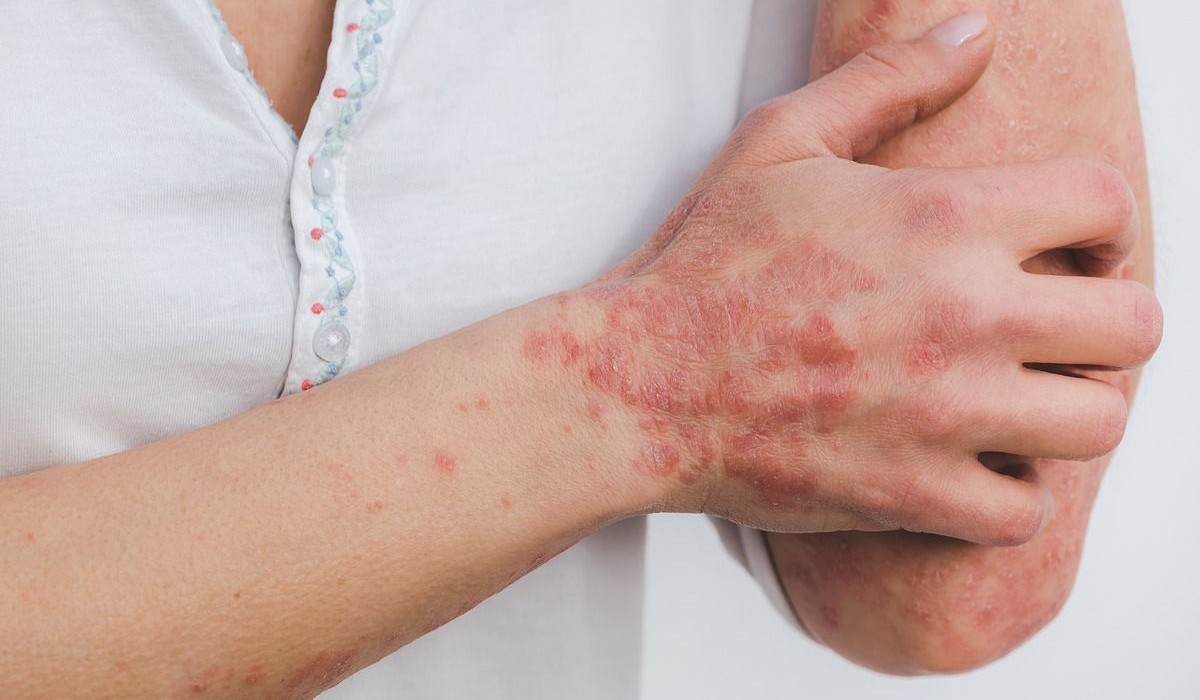
The most prominent external sign of infection with Lyme borreliosis is erythema (a red spot), 3 or more centimeters in diameter, which forms 7-14 days after the tick bite. The disease is accompanied by fever, muscle pain, and swollen lymph nodes. Later on, if left untreated, the joints, heart, and nervous system are affected. Lyme disease is dangerous because it can lead to disability.
Ticks are widespread in forests throughout our country. They are moisture-loving and prefer shaded, humid deciduous and mixed forests with thick grass and undergrowth, clearings, tall grass, and deadwood along forest edges. Ticks do not sit on trees and do not drop onto people from above. They prefer vegetation closer to the ground surface. Larvae usually sit on grass no higher than 30 cm, while adults sit on weeds or bushes at a level no higher than 1 m. Ticks can smell an animal or a person from a distance of fifteen meters.
If an attached tick is found, you should contact the nearest healthcare organization, where medical assistance will be provided to remove it. If it is impossible to immediately contact a healthcare facility, the tick should be removed independently using: specialized factory-made tick removal devices according to their instructions for use; a thread loop (a strong thread is tied into a knot as close to the tick’s proboscis as possible, and the tick is extracted by pulling it upward with circular movements, avoiding sudden jerks); or fine tweezers. Usually, the tick is extracted after 1-3 turns. It is important to remove the tick from the skin entirely along with its proboscis without crushing it.
Treat the bite site with any alcohol solution.
After removing the tick, you should contact a primary care physician or an infectious disease specialist at your place of residence or stay. If necessary, they will prescribe prophylactic antibiotic treatment and establish medical observation. It must be remembered that the maximum effect of chemoprophylaxis is achieved only if antibiotics are started within the first 72 hours after the tick bite. In case of repeated tick bites, antibiotic prophylaxis should be repeated.
Laboratory testing of the removed tick is optional, as it delays the timeline for effective chemoprophylaxis, and after 72 hours, performing it is not advisable at all. If within a month after the tick bite you experience changes in your well-being, notice a fever, muscle aches, headaches, or an enlarging red spot at the bite site, you must urgently consult a doctor.
Human infection with tick-borne encephalitis is also possible through the consumption of raw goat’s milk. Therefore, milk should be boiled for 2-3 minutes before consumption.
You can protect yourself from tick-borne encephalitis with a vaccination, while no vaccine has been developed against Lyme borreliosis.
The course of prophylactic immunization against tick-borne encephalitis consists of 2 vaccinations administered at an interval of 1-7 months. The vaccination course (two shots) can be carried out throughout the year, including during the summer period (epidemiological season), but no later than two weeks before visiting an area endemic for tick-borne encephalitis. The most optimal interval between the first and second vaccinations is 5-7 months (the first vaccination is recommended in October-November, and the second in March-April). To maintain immunity, it is recommended to get a booster dose one year after completing the vaccination course. Subsequently, boosters are given every 3 years.
For emergency prophylaxis, if vaccinations are started in the summer, the interval between doses can be reduced to 14 days.