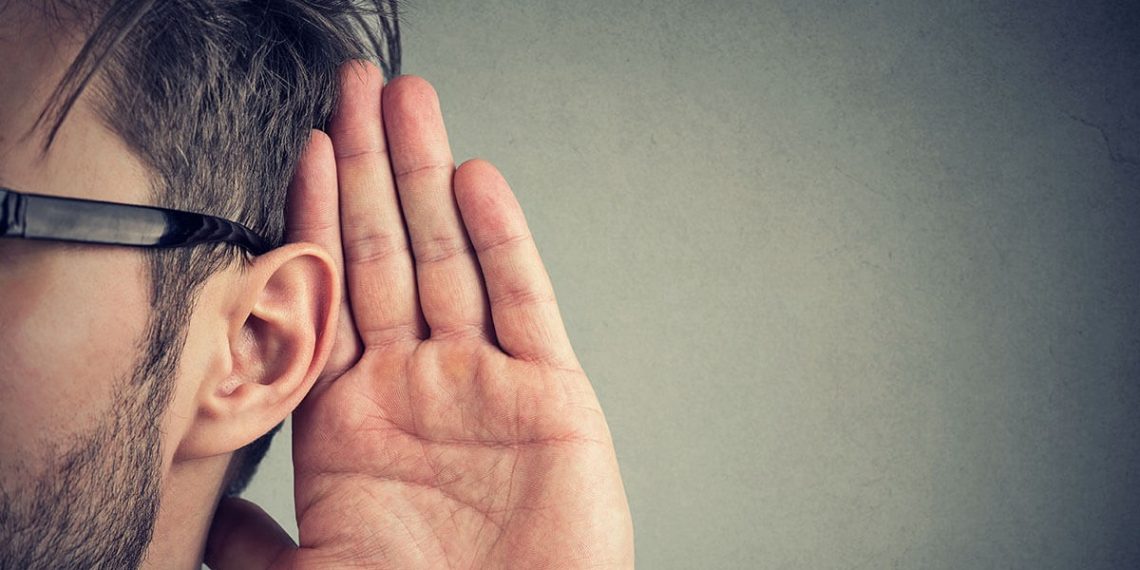
March 3 is International Hearing Day.
Until recently, it was generally accepted that hearing loss was most often a problem among older adults. However, in recent years, hearing loss has become increasingly common among young people. According to studies conducted in various countries (USA, Germany, Russia), between 17% and 20% of adolescents and young adults suffer from some degree of hearing loss. Therefore, World Hearing Day 2026 will be dedicated to the prevention of hearing loss among young people.
The main factors leading to hearing loss
The most common cause of hearing loss is, in fact, the modern lifestyle of the majority of the population, especially those living in large cities, where they are exposed daily to a multitude of physical factors, including intense sound loads on all parts and structures of the auditory system.
Young people are particularly at risk. Statistics show that approximately 1.1–1.35 billion young people worldwide are at risk of hearing loss due to unhealthy habits such as listening to loud music and using headphones, which leads to early hearing loss.
How our hearing aid works
Vibrations of the eardrum transmit sounds to the inner ear, where sensitive hair cells are located. They convert these vibrations into sound, which we can hear and understand. However, these cells can be damaged by adverse factors, including exposure to loud noise. If high noise levels are present for a short time, they recover, and hearing acuity is only temporarily and slightly impaired. With repeated and prolonged exposure to noise, these cells become more severely damaged, making hearing restoration impossible. As the number of damaged hair cells increases, permanent hearing loss develops.
Consequences of improper use of headphones
A questionnaire survey of middle and high school students, as well as university students, conducted in various Russian cities (490 respondents) revealed that young adults who regularly use headphones in their daily lives (6-7 days a week, 2-3.5 hours a day at high volume) report 2.6 times more changes in their well-being than those who do not. On average, 38.6% of them reported hearing loss and ear congestion, 36.0% reported sleep disturbances, 14.1% reported headaches, and 10.0% reported dizziness.
Tips for using headphones to prevent hearing loss
Based on the research conducted, recommendations were developed for the use of headphones to protect the hair cells of the inner ear from damage and prevent the development of hearing loss.
- It’s important to adhere to the “60/60 rule,” meaning the volume shouldn’t exceed 60% of the maximum (usually 60-70 dB), and the continuous listening time shouldn’t exceed 60 minutes, followed by a 10-15 minute break. When following these guidelines, the total daily headphone use time is 1.5-2 hours. At louder volumes (at 100 dB), to prevent irreversible hearing loss, the exposure time should be reduced to 10-15 minutes, and at maximum volume (>100 dB), the safe limit is only 1-5 minutes (if these guidelines are not followed, hearing loss can develop in as little as 3-4 months).
- On-ear headphones are preferable to in-ear headphones: they provide better sound insulation and therefore don’t require increased volume. Due to their close proximity to the eardrum, in-ear headphones exert greater pressure on it, which over time can lead to decreased eardrum mobility and, consequently, hearing loss. They also block the ear canal, promoting the formation of earwax.
- A hearing aid should have at least one “headphone-free” day, meaning a complete 24-hour break from using the device to allow the hearing aid to rest, to prevent hearing loss.
- Avoid using headphones in noisy environments (subways, public transportation, public events, discos, etc.) to avoid the need to increase the volume.
- Using headphones outdoors is also not recommended, as this can interfere with your ability to perceive reality and significantly increases the risk of accidents.
According to experts from the World Health Organization, 60% of all cases of hearing loss can be prevented through preventative measures. Therefore, it’s important to remember that a feeling of fullness or ringing in the ears after using headphones is a sign of sound (acoustic) trauma. Don’t let it happen!
Hearing impairment in children
The auditory analyzer plays a crucial role in the formation and development of the signaling system and speech. There is a close connection between hearing and speech development. Any hearing impairment in a child, such as hearing loss, even unilateral, or deafness, has a significant impact on their learning ability, general development, and mental health. It hinders the child’s integration into society, causes irreparable emotional harm to the individual, and inflicts significant economic losses on society.
The most dangerous type of hearing loss is so-called sensorineural hearing loss, caused by damage to the inner ear or auditory nerves. It can be congenital or acquired.
Acquired hearing loss occurs in 3 to 5 newborns out of every 1,000 births. Causes include hearing loss in family members, infectious diseases suffered by the pregnant woman, and the use of medications that are toxic to the hearing system during pregnancy. Head and skull injuries, as well as prolonged exposure to noise and vibration, also play a significant role.
These children require prompt correction of their hearing impairments. The maximum age limit for beginning rehabilitation is 2.5 years. If the process of correction of hearing impairments does not begin until age 7, achieving effective speech acquisition is virtually impossible.
To detect hearing loss early, the Republic of Brest has developed specialized diagnostic methods that allow for the most accurate detection of hearing problems at an early stage (an audiological screening system). This involves assessing the inner ear of newborns three days after birth in the maternity hospital using a special device. If the test is negative, the child is referred for further examination to the regional audiology clinic.
Brest has a regional pediatric audiology clinic, which diagnoses the hearing of young children and provides treatment and consultation services to children with hearing loss. The second stage of screening, diagnostic, is performed here using specialized equipment. If the test result is negative, the child undergoes additional examination using modern methods.
Features of mental development of children with hearing impairments
Ignoring hearing loss in children at an early age can lead to the resulting problem of underdevelopment of speech and other functions, such as thinking, memory, and attention. This type of development is called deficit development.
In general, the mental development of children with hearing impairments follows the same patterns as that of healthy children, but is significantly slowed due to limited exposure to the outside world. Furthermore, the mental activity of a child with hearing impairments is simplified, so to speak—undertones and semitones are lost. It is more difficult for a child to connect different phenomena with one another and to recognize emotions. Speech impairment is also a distinctive feature of children with hearing impairments.
Features of mental development of children with hearing impairments
A child’s mental development is characterized by the development of their attention, memory, and thinking. According to numerous studies, hearing-impaired children experience difficulties in developing all of these areas.
Features of attention
Children with hearing loss perceive significantly fewer elements simultaneously than children with normal hearing. This is especially evident in lessons, when they must, for example, listen to the teacher and write in a notebook simultaneously. It also takes significantly longer for a hearing-impaired child to switch from one type of perception to another, for example, from reading to listening.
Features of memory
Children with normal hearing involuntarily memorize a huge number of things simply through contact with the world around them. As we recall, a child with hearing loss has very limited contact with the world around them, so their memory is significantly reduced, although they retain the same capacity as a healthy child. Children with hearing loss are good at remembering words closely associated with visual images, but have a significantly lower memory for words denoting auditory or abstract phenomena.
Peculiarities of thinking
Due to limited contact with the world and society, a child with hearing impairment has a limited range of cognitive tools. They often try to open different doors with the same key. They may have difficulty distinguishing between important and secondary details in stories or drawings, or identifying subtle cause-and-effect relationships. Overall, the development of thought processes will be significantly delayed.
Teaching children with hearing impairments is a complex task. It requires the combined efforts of parents and specialists.
Symptoms of hearing loss in children:
- A newborn (2-3 week old) does not flinch at loud, unexpected sounds;
- A 1-3 month old does not respond to the mother’s voice or the sounds of toys, and does not turn their head toward the source of the sound;
- Does not coo at 2-4 months;
- Does not pronounce simple words or parts of words at 6-12 months;
- Tinnitus, ear discomfort;
- Unintelligible, poor speech for a long time; incorrect pronunciation of sounds by children after one year;
- A child does not begin to speak for a long time, uses gestures or sounds instead of words;
- A child frequently asks questions again;
- Temporary hearing loss, mistakenly attributed to a chronic runny nose;
- A child does not pay attention to loud sounds (in middle and late childhood);
- Increases the volume on the TV, radio, etc., and approaches the sound source.
If you notice any of the above symptoms in your child, you should consult a pediatric otolaryngologist/audiologist for an accurate diagnosis, as some of these symptoms may indicate personality traits and psycho-emotional state rather than hearing loss. Only a pediatric otolaryngologist/audiologist can identify the underlying condition and prescribe the necessary treatment and rehabilitation.