

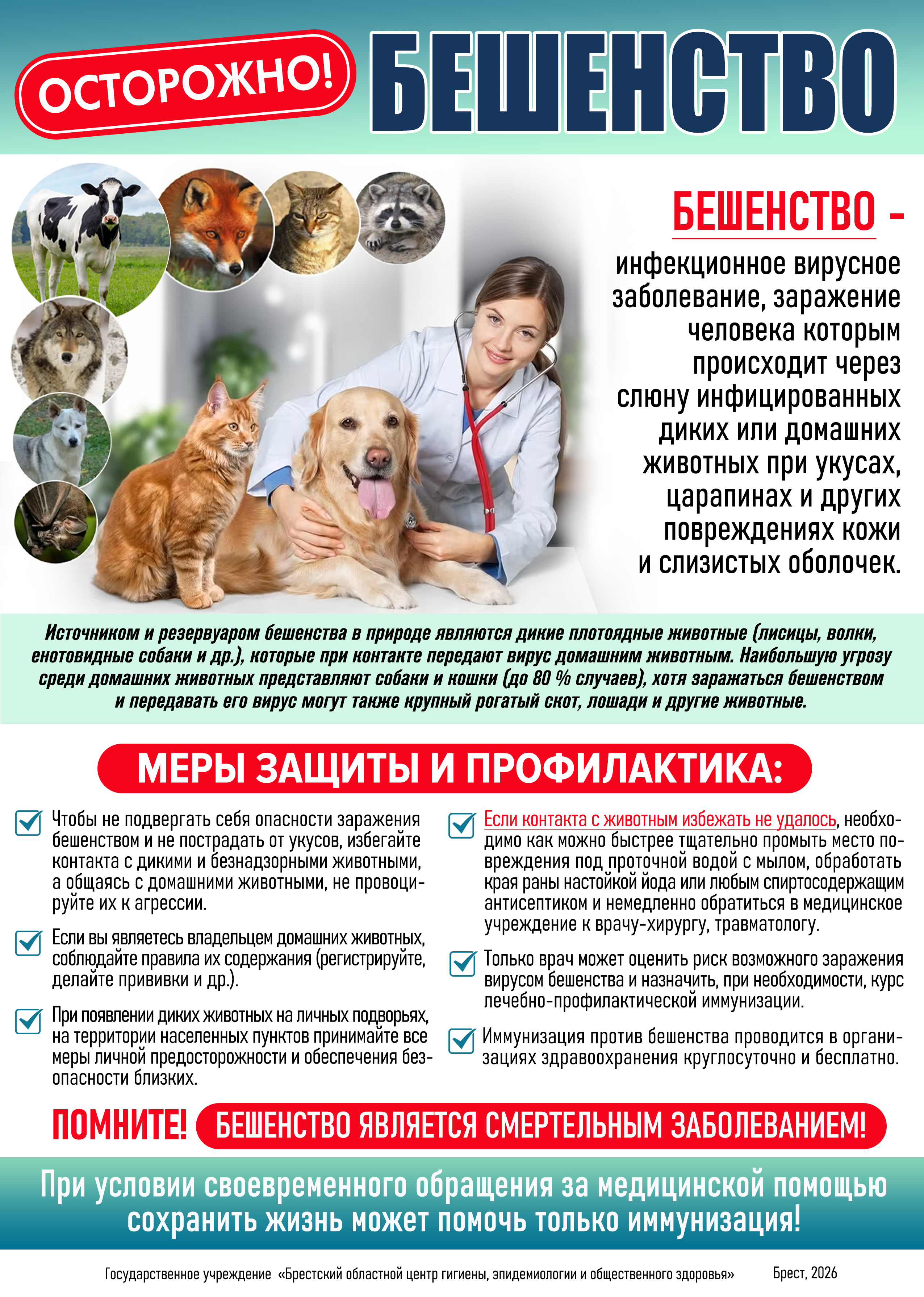
Rabies is an infectious viral disease that is transmitted to humans through the saliva of infected wild or domestic animals through bites, scratches, and other damage to the skin and mucous membranes.
The source and reservoir of rabies in nature are wild carnivores (foxes, wolves, raccoon dogs, etc.), which transmit the virus to domestic animals through contact. Dogs and cats pose the greatest risk among domestic animals (accounting for up to 80% of cases), although cattle, horses, and other animals can also become infected with rabies and transmit the virus.
Protective measures and prevention:
- To avoid the risk of rabies infection and bites, avoid contact with wild and stray animals, and when interacting with domestic animals, do not provoke them to aggression.
- If you are a pet owner, follow the rules for keeping them (register, vaccinate, etc.).
- If wild animals appear in your personal property or in populated areas, take all necessary precautions to ensure the safety of your loved ones.
- If contact with an animal cannot be avoided, it is necessary to thoroughly wash the injured area with soap and running water as quickly as possible, treat the wound edges with iodine tincture or any alcohol-containing antiseptic, and immediately contact a surgeon or traumatologist at a medical facility.
- Only a doctor can assess the risk of possible infection with the rabies virus and, if necessary, prescribe a course of therapeutic and prophylactic immunization.
- Immunization against rabies is carried out in healthcare organizations 24 hours a day and free of charge.
Remember! Rabies is a fatal disease! If you seek medical attention promptly, only immunization can save your life!
This content is not available in English. We apologize for the inconvenience.